IoT projects often begin with a clear business idea.
A company may want to build a connected device, automate equipment monitoring, collect real-time data, improve access control, or create an entirely new IoT product. The business objective may be well defined, but turning that idea into a working and scalable solution is often more complex.
One common reason is the involvement of multiple development vendors.
Hardware may be developed by one company. Firmware may come from another. A separate team may build the mobile application or cloud platform. Security and integration may then become additional responsibilities managed across different partners.
While each vendor may deliver its individual component, bringing everything together can create integration challenges, communication gaps, delays, and unclear accountability.
For businesses planning connected products or digital infrastructure, working with one partner for end-to-end IoT solutions can simplify the journey from concept to deployment.
Why Multiple IoT Vendors Can Make Development More Complex
An IoT solution is not a single piece of technology.
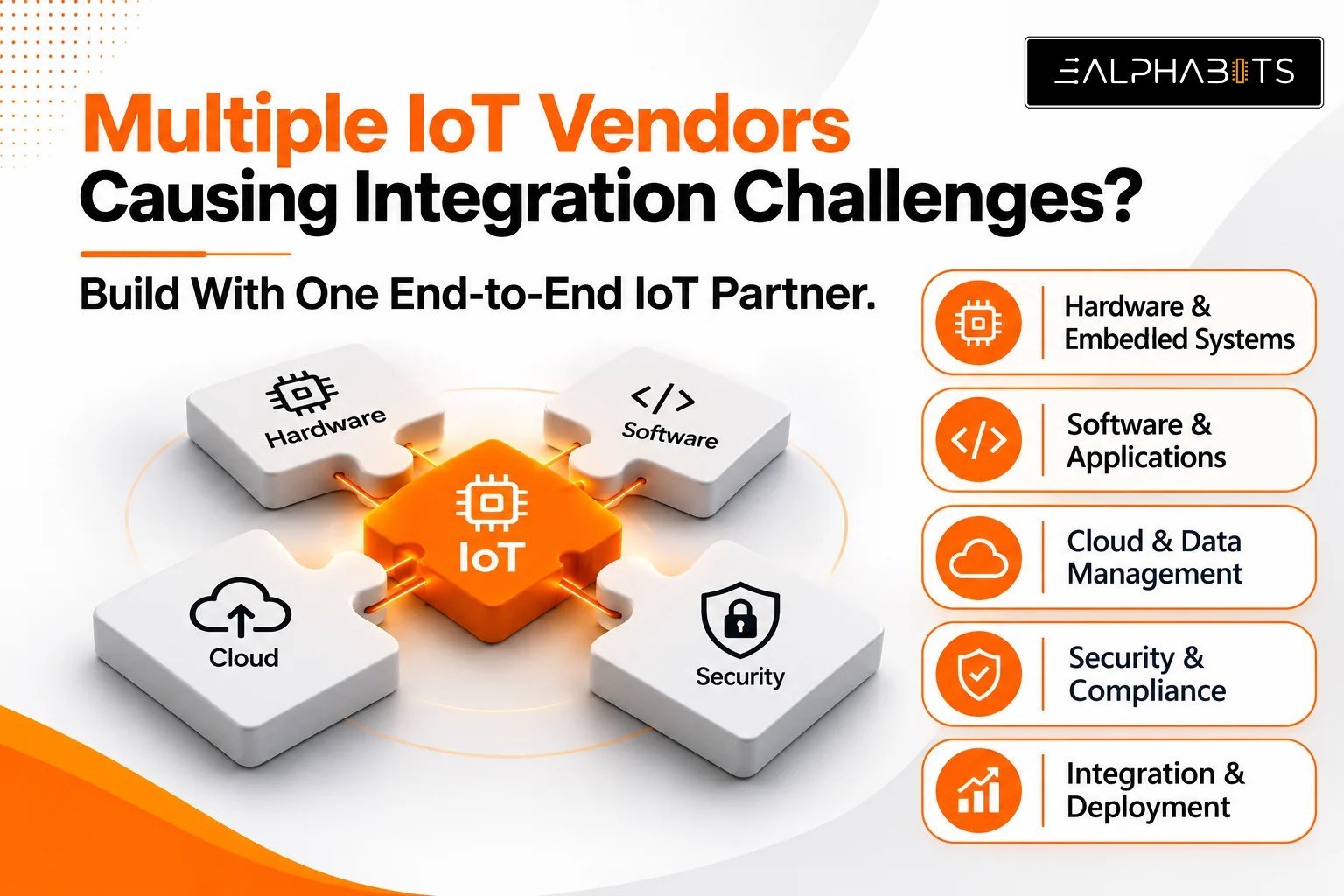
It is a connected ecosystem that may include hardware, sensors, PCB design, embedded firmware, communication protocols, applications, cloud infrastructure, data management, and security.
When these components are developed independently, every connection between them becomes an important point of coordination.
For example, a hardware team may complete a device based on one set of technical specifications. Later, the software team may identify additional requirements for data transmission or device communication. Changes at this stage can affect the hardware, firmware, application, or overall project timeline.
The challenge is not necessarily the capability of individual vendors. The challenge is ensuring that every technology layer is designed to work together from the beginning.
This is where an integrated approach to IoT product development becomes valuable.
Where Integration Challenges Begin
Different Technology Decisions
Separate vendors may make technology decisions based on their individual area of work. However, those decisions may not always align with the requirements of the complete solution.
A communication protocol selected during hardware development, for example, needs to work efficiently with the firmware, application, and cloud environment.
Without early alignment, businesses may face unexpected modifications later in the development process.
Communication Gaps Between Teams
When several external teams are involved, communication often moves through multiple points of contact.
A business may need to explain the same requirement to different vendors, coordinate technical discussions, and follow up on dependencies between teams.
This can make project management more demanding and increase the possibility of misunderstandings.
Unclear Ownership of Problems
When an integration issue occurs, identifying its source can become difficult.
Is the problem related to the hardware? Firmware? Application? Network communication? Cloud infrastructure?
When different components are managed by separate vendors, resolving an issue can sometimes involve multiple rounds of communication before a clear solution is identified.
An end-to-end IoT solution provider can offer a more unified approach, with one team responsible for understanding how the complete system works together.
The Hidden Cost of Managing Separate IoT Development Partners
The cost of an IoT project is not limited to development expenses.
Managing multiple vendors can also create operational costs through additional coordination, project delays, repeated testing, and changes required during integration.
Businesses may need internal resources to manage communication between different development teams. Technical dependencies can also slow down progress when one component cannot move forward until another vendor completes a change.
There is also the risk of rebuilding parts of the solution if technologies are found to be incompatible later in the project.
A unified approach does not mean every project will be simple. IoT development still requires detailed planning and technical expertise.
However, having one team involved across the development lifecycle can reduce unnecessary handoffs and help maintain consistency between different technology layers.

What an End-to-End IoT Solution Should Bring Together
A complete IoT solution requires more than a connected device.
Depending on the project, the development process may involve:
- IoT hardware development
- PCB design and prototyping
- Embedded systems and firmware development
- Device connectivity and communication
- Mobile or web applications
- Cloud and data integration
- Device management
- Cybersecurity and access control
- Testing and deployment
The value of an end-to-end approach comes from considering these elements as parts of one connected system.
This creates a stronger foundation for building custom IoT solutions that are designed around the complete business requirement.
From Concept to Deployment: Building IoT With One Technology Partner
Every IoT project starts with a different objective.
Some businesses need a custom device. Others need to connect existing infrastructure. A company may also have a product idea but require technical guidance to determine the most practical development roadmap.
Working with one IoT development company across the project can provide continuity from the initial concept through deployment.
The process can begin with understanding the business objective and technical requirements. From there, the development roadmap can bring together the required hardware, embedded software, connectivity, applications, and security considerations.
As development progresses, the same team has visibility across the technology stack.
This makes it easier to identify dependencies early and make informed decisions when changes are required.
The result is not simply fewer vendors. It is a more connected approach to developing a connected solution.
Why a Connected Development Approach Improves Project Visibility
Businesses do not always need to understand every technical detail of an IoT system. However, they do need clarity about how the project is progressing.
With multiple vendors, gaining a complete view of development can require collecting updates from different teams.
A unified development approach provides a clearer point of accountability.
The business can work with one technology partner that understands the broader project rather than managing separate relationships for each component.
This can improve visibility into:
- Project requirements and technical decisions
- Dependencies between development stages
- Testing and integration progress
- Changes that affect the overall solution
- Deployment readiness
For companies developing a new connected product or modernising existing operations, this visibility can make technology development easier to manage.
Build IoT Security Into the Development Process From the Start
Connected devices can create additional cybersecurity considerations.
IoT systems may collect business data, communicate across networks, and connect with applications or cloud platforms. Security therefore needs to be considered across the technology architecture.
A secure approach may involve device authentication, controlled access, secure communication, firmware considerations, and protection of the wider system.
When security is treated as a separate requirement at the end of development, changes can become more difficult and costly.
Building cybersecurity considerations into the development process from the beginning can help businesses create a more reliable IoT foundation.
This is particularly important when connected devices are part of business operations, infrastructure, or access control environments.
How E-Alphabits Supports End-to-End IoT Development
E-Alphabits helps businesses move from an IoT concept to a connected solution through an integrated technology approach.
The development capabilities cover key areas required for IoT product development, including hardware, PCB design, embedded systems, firmware, applications, cloud integration, and cybersecurity.
Instead of treating each technology component as an isolated project, the focus is on understanding how the complete solution needs to work together.
This approach can support businesses that are:
- Developing a new IoT product
- Building custom connected devices
- Looking for integrated hardware and software development
- Modernising existing infrastructure with connected technology
- Seeking one technology partner from concept through deployment
Every project has different technical and business requirements. The right development roadmap should therefore begin with understanding the idea, the intended use case, and the technologies required to bring the solution to life.
Planning a connected product?
See our IoT development services for hardware, PCB, firmware, app and cloud capabilities, or read Edge AI vs Cloud AI for how processing location shapes a connected system’s architecture.
Build the Complete IoT Solution, Not Just Individual Components
An IoT project involves many moving parts.
Hardware needs to communicate with firmware. Devices need to connect with applications and infrastructure. Data needs to move securely. Every component needs to support the larger business objective.
Managing these requirements across multiple vendors can create unnecessary complexity when technologies and teams are not aligned.
Working with one end-to-end IoT solution partner provides a more connected path from concept to deployment.
For businesses with a clear idea but an uncertain technology roadmap, the right partner can help bring together the hardware, software, connectivity, and security required to build a complete solution.
E-Alphabits supports businesses in developing connected technology with an integrated approach designed around the complete IoT journey.
Frequently Asked Questions
What are end-to-end IoT solutions?
End-to-end IoT solutions bring together the technologies required to build and deploy a connected system. Depending on the project, this can include hardware, PCB design, firmware, embedded systems, applications, cloud integration, connectivity, and cybersecurity.
What should businesses look for in an IoT development company?
Businesses should look for relevant technical capabilities, experience with the required technology stack, a clear development process, and the ability to understand how different components of the IoT solution need to work together.
Can an IoT solution be customised for a specific business requirement?
Yes. Custom IoT solutions can be developed based on the intended use case, device requirements, connectivity needs, applications, and operational objectives.
Does IoT development include both hardware and software?
A complete IoT project can involve both. Hardware and PCB design may be required for the physical device, while embedded firmware, applications, cloud platforms, and integrations support the connected functionality.
When should cybersecurity be considered in an IoT project?
Cybersecurity should be considered from the planning and architecture stages. Connected devices, communication, access, and data can all introduce security considerations that are easier to address when included throughout the development process.