Artificial intelligence is becoming an important part of enterprise software, data management, and business operations. Companies are no longer exploring AI only for basic chatbots or content generation. They are looking for ways to integrate intelligence into existing applications, automate complex workflows, and build solutions around their own business data.
However, generic AI platforms may not meet every enterprise requirement. Businesses often need greater control over confidential information, customized functionality, existing software integrations, and long-term operating costs.
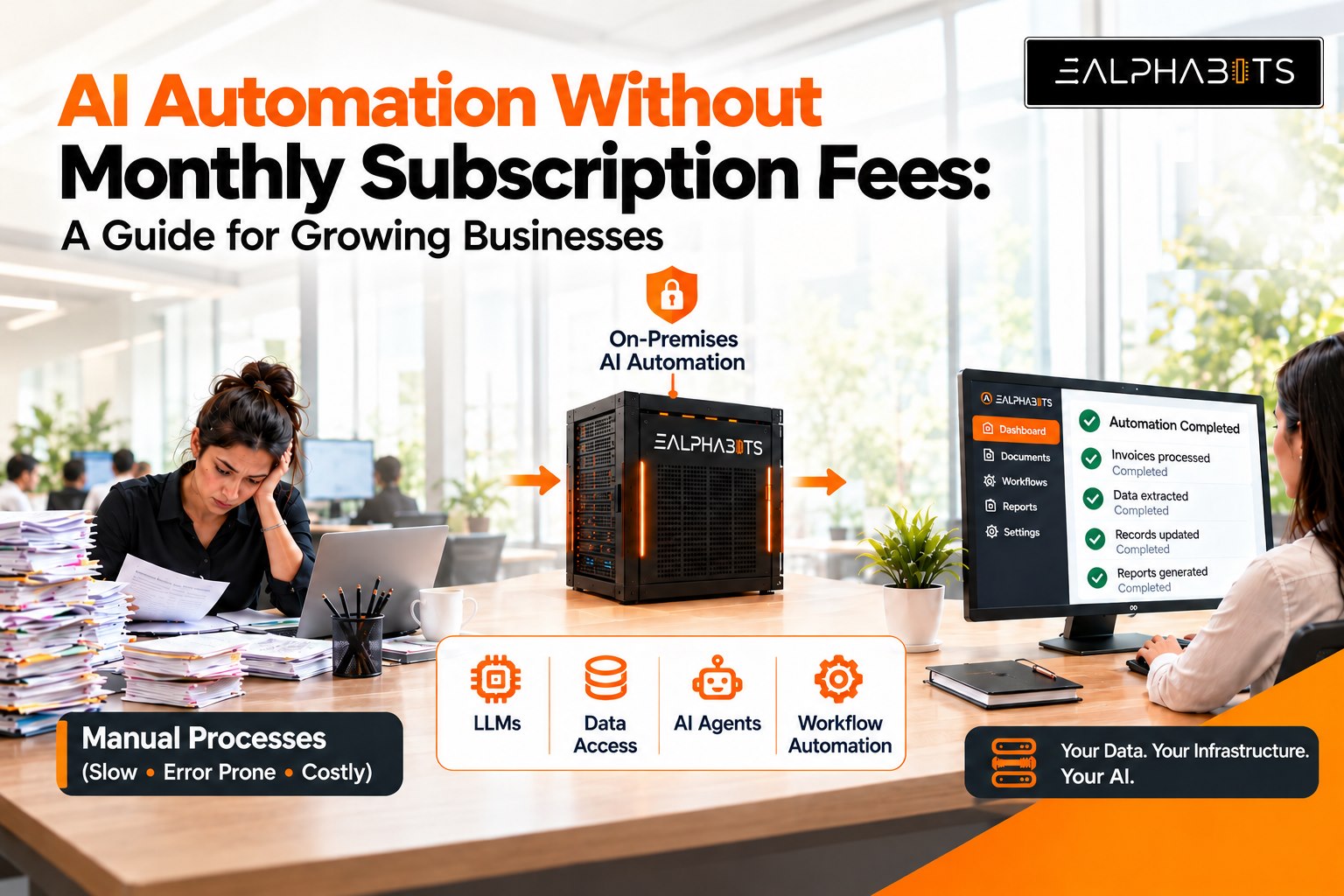
Custom Enterprise AI Solutions address these requirements by combining large language models (LLMs), private data access, AI agents, and workflow automation in a system designed for specific operational needs.
With E-Alphabits, businesses can explore custom AI development and on-premises deployment to build private, business-specific intelligence without depending entirely on external AI platforms or recurring software subscriptions.
Why Enterprises Need More Than Generic AI Tools
Public AI tools can be useful for everyday tasks, but enterprise applications often require more specialized capabilities. A software company, for example, may need to integrate AI into its existing product, while a manufacturing enterprise may want to automate document processing and internal reporting.
Using separate AI tools for every requirement can create fragmented workflows, additional costs, and data management challenges.
Custom enterprise AI enables organizations to build solutions around their operational processes. These systems can connect with internal databases, business documents, applications, and approved information sources to provide relevant responses and support defined workflows.
Rather than adapting every process to a ready-made platform, businesses can develop AI systems that fit their technical environment and operational objectives.
What Are Custom Enterprise AI Solutions?
Custom Enterprise AI Solutions are AI systems developed or configured to meet an organization’s specific business and technical requirements. They can combine LLMs, knowledge retrieval, AI agents, data processing, and application integrations.
Unlike general-purpose AI assistants, these systems can be designed to work with authorized internal information and perform tasks relevant to a particular business.
Common applications include:
- Searching internal documents and technical knowledge bases.
- Extracting information from reports, contracts, and business records.
- Generating structured summaries and operational reports.
- Connecting AI capabilities with existing enterprise applications.
- Automating repetitive tasks across multiple business systems.
- Developing private AI assistants for employees, customers, or specialized software products.
For companies building AI-enabled products, custom development also provides greater flexibility over functionality, deployment, and integration.
Combining AI Automation with Existing Business Systems
Enterprise automation involves more than executing predefined tasks. Modern workflows may require systems to interpret documents, understand requests, retrieve information, and determine the next step within defined rules.
Traditional robotic process automation uses software bots to perform repetitive, rule-based activities such as transferring information between applications, updating records, and processing structured data.
AI can extend these capabilities by handling tasks that involve unstructured information, language understanding, and context-dependent decisions.
For example, an enterprise workflow could extract information from incoming documents, classify them, compare relevant details against internal records, and prepare a structured output for review. Rule-based automation can then transfer approved information into the appropriate business application.
Combining AI with robotic process automation can help businesses reduce repetitive work while maintaining defined approval and verification processes.
This approach is particularly useful for organizations that want to modernize existing operations without replacing their entire software infrastructure.
Building Private AI on Existing Infrastructure
Data control is a major consideration when introducing AI into enterprise environments. Internal documents, customer records, technical designs, financial information, and proprietary business processes may require restricted access.
On-premises AI deployment allows eligible AI models and supporting systems to run within an organization’s own infrastructure. This can reduce the need to send sensitive information to public AI platforms, depending on the architecture and integrations used.
A private AI system can be configured to access approved documents, databases, and internal applications. Access permissions, authentication, logging, and other security controls can help restrict information to authorized users.
Organizations can also evaluate whether open-weight models or other suitable model options meet their accuracy, performance, and infrastructure requirements.
However, on-premises deployment does not automatically guarantee complete security. Effective implementation still requires appropriate infrastructure, access management, updates, monitoring, and data governance.
For enterprises handling confidential information, the objective is to make AI useful while maintaining greater control over where data is processed and how it is accessed.
Reducing Recurring AI Costs Through Custom Deployment
AI operating expenses can increase as usage grows. Depending on the platform, businesses may pay for subscriptions, API consumption, hosted services, additional users, or specialized software features.
A custom on-premises system offers another approach. By deploying suitable models within controlled infrastructure, businesses can reduce or avoid recurring charges for certain external AI platforms and model APIs.
E-Alphabits focuses on custom AI solutions without recurring monthly software or platform charges under the applicable deployment model.
This can be valuable for companies planning sustained AI usage across multiple departments or integrating AI directly into their products.
However, a complete cost assessment should include hardware, electricity, maintenance, technical support, integration, and infrastructure upgrades where applicable. The financial benefit depends on workload volume, model requirements, and existing resources.
The objective is not simply to eliminate one subscription. It is to establish a sustainable cost structure that supports business growth without unnecessary recurring platform dependencies.
Measuring Business Value: Up to 60% ROI Potential
The business value of AI should be measured through operational outcomes rather than the number of tasks automated.
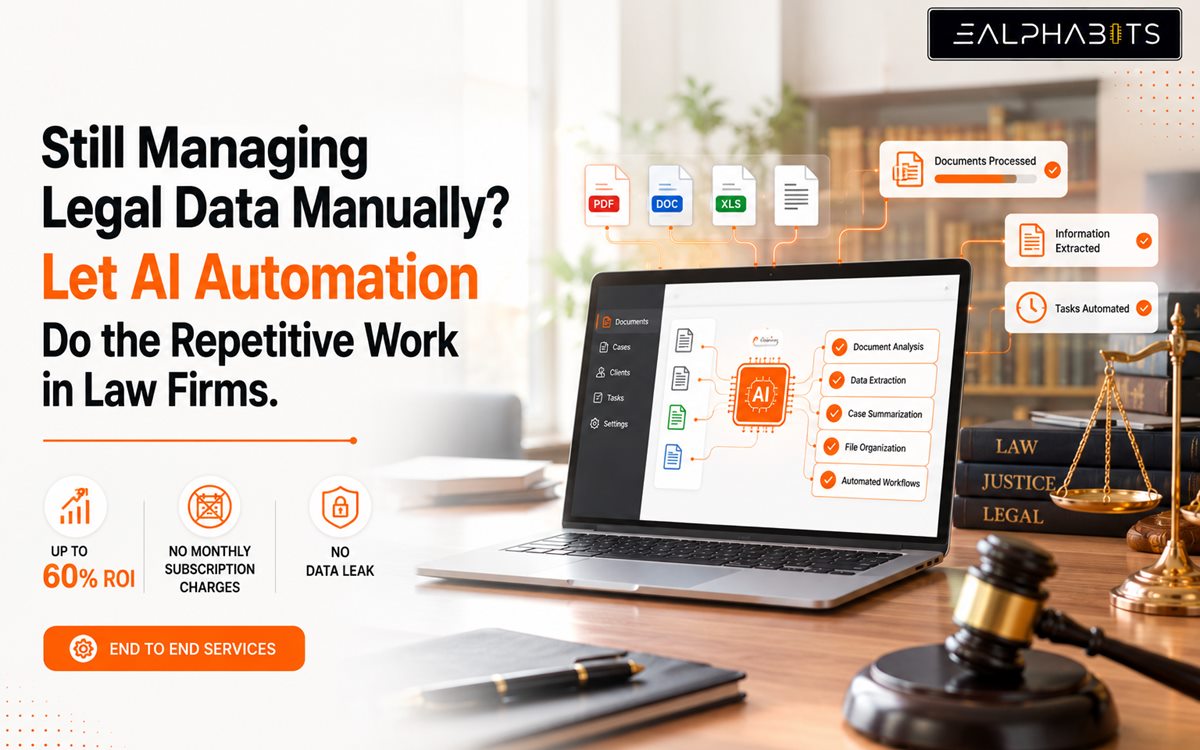
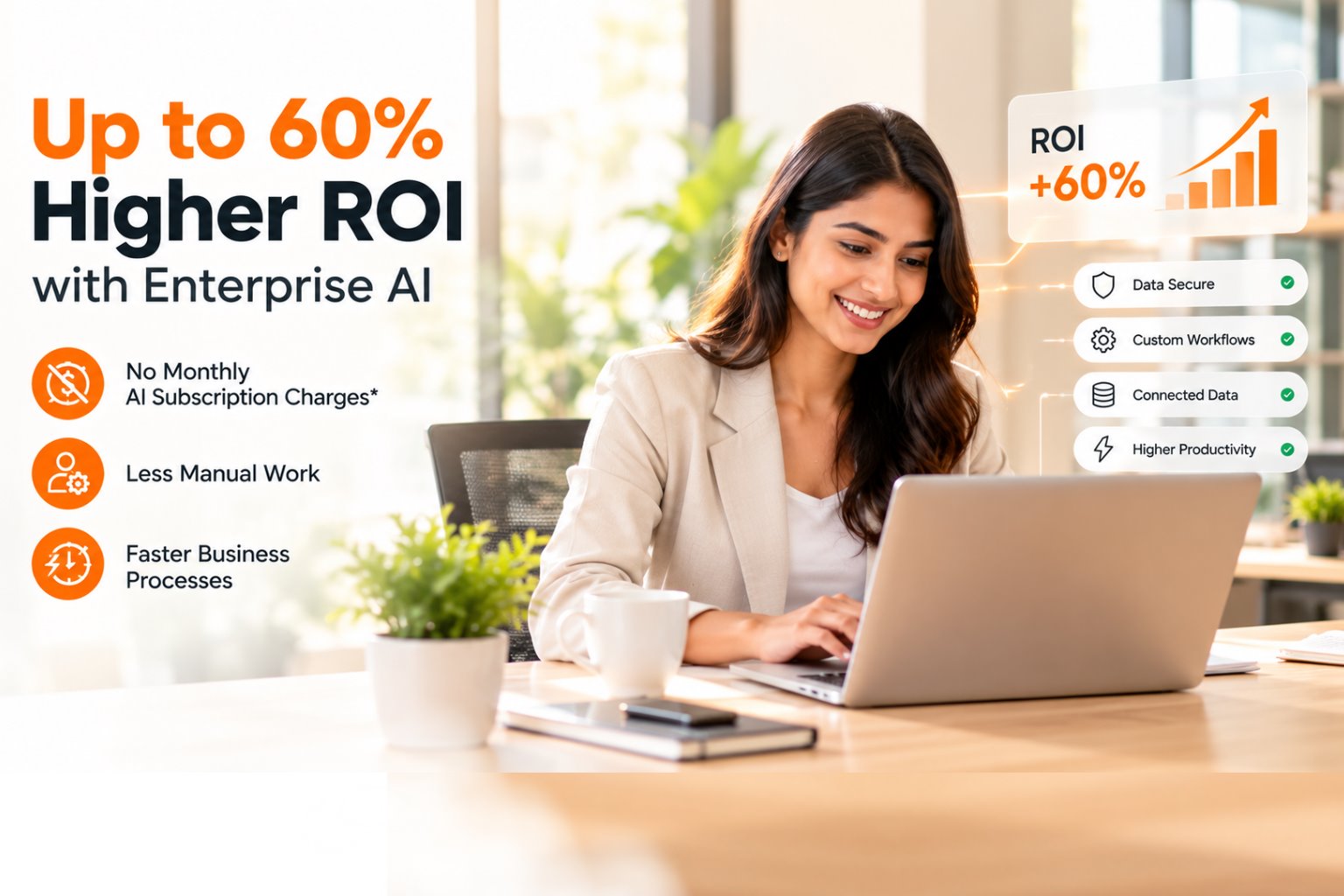
E-Alphabits aims to help businesses explore AI automation opportunities with up to 60% ROI potential, depending on the use case, implementation scope, and measurable business results. This should be treated as a potential outcome, not a guaranteed return for every deployment.
ROI assessment can begin by identifying processes that consume significant employee time, involve repeated data entry, or require frequent document review.
Businesses can then compare the original process with the automated workflow using measurable indicators such as:
- Time required to complete each task.
- Reduction in manual processing effort.
- Error rates and rework requirements.
- Operational cost per transaction.
- Processing capacity and turnaround time.
- Ongoing software and infrastructure expenses.
For example, automating document classification and information extraction may reduce the time employees spend reviewing large volumes of records. The actual savings will depend on document complexity, accuracy requirements, and the level of human review retained.
A structured evaluation helps organizations identify where AI delivers practical value and prioritize deployments with measurable business benefits.
Which Companies Can Benefit from Custom Enterprise AI?
Custom AI is relevant to more than businesses adopting their first AI tool. It can also support organizations developing software products, managing complex data environments, or expanding existing automation capabilities.
IT and software development companies: Integrate custom LLMs, AI agents, and intelligent search into existing applications or develop AI-enabled products for specific industries.
Data-driven organizations: Automate information extraction, internal knowledge retrieval, reporting, and repetitive analytical workflows.
Manufacturing and industrial enterprises: Connect AI with operational documentation, maintenance records, quality reports, and internal procedures.
Professional and document-intensive businesses: Improve document processing, knowledge management, and access to organizational information.
Enterprises modernizing legacy systems: Introduce AI capabilities into existing software and workflows without requiring a complete technology replacement.
For organizations comparing AI automation company in India, technical expertise in AI development, deployment, integration, and data security is an important evaluation factor.
Businesses searching for an AI automation company in India should also assess whether a provider can build around their existing infrastructure instead of offering only a standardized product.
Similarly, companies evaluating AI solution providers in India should consider customization, deployment flexibility, data control, long-term operating costs, and the ability to support evolving requirements.
How E-Alphabits Supports Enterprise AI Development
E-Alphabits develops custom AI solutions designed around business-specific requirements, internal data, and operational workflows.
The approach can include custom LLM development, private knowledge systems, AI agents, and workflow automation. Solutions can be designed to connect with relevant documents, databases, and existing applications according to the deployment requirements.
On-premises deployment can provide greater control over the AI environment, while customized workflows help align system functionality with actual business processes.
The focus is on building practical AI capabilities that organizations can integrate into their operations or existing software products.
Businesses can evaluate their requirements, suitable models, infrastructure, and automation opportunities before selecting an implementation approach. This helps establish realistic expectations around performance, security, scalability, and cost.
Exploring private AI for your business?
See What Is Enterprise AI? for the fundamentals, How Custom Enterprise LLMs Automate Business Workflows for workflow examples, and AI Automation for Law Firms for a document-heavy use case.
Conclusion
Enterprise AI is moving beyond standalone assistants toward systems that connect intelligence with business data, applications, and operational workflows.
Custom Enterprise AI Solutions give organizations greater flexibility to build these capabilities around their own requirements. With appropriate deployment and security controls, businesses can improve data management, automate repetitive processes, reduce dependence on recurring AI platform charges, and measure operational improvements.
For companies developing software, expanding automation, or modernizing enterprise operations, a customized approach can provide a practical foundation for long-term AI adoption.
E-Alphabits helps businesses explore custom LLMs, private AI deployment, and enterprise workflow automation tailored to their operational needs.
Frequently Asked Questions
Can enterprise AI run on-premises?
Yes. Suitable AI models and supporting applications can be deployed on an organization’s own infrastructure, subject to hardware, performance, and security requirements.
How does AI differ from robotic process automation?
Robotic process automation primarily executes predefined, rule-based tasks. AI can interpret language, process unstructured information, and support context-dependent tasks. Combining them can support more flexible workflows.
Can custom AI eliminate monthly software charges?
A suitable deployment can avoid recurring charges for specific AI platforms or software subscriptions. Infrastructure, maintenance, support, and other operating expenses may still apply.
Can businesses achieve up to 60% ROI through AI automation?
Up to 60% ROI potential may be achievable in suitable use cases, but actual results depend on the initial process costs, implementation expenses, adoption, and measurable operational improvements.