CCTV cameras are an important part of security for businesses, factories, warehouses, offices, hospitals, schools, and other facilities. They help organizations monitor activities, protect assets, and investigate incidents. However, a CCTV system is only effective when cameras can continuously capture a clear view.
When someone blocks, covers, damages, or interferes with a camera, a critical surveillance blind spot can be created. Traditional CCTV systems may continue recording without immediately alerting the security team that the camera’s view has been compromised.
This is where Camera AI can add another layer of intelligence. By continuously analyzing camera activity, an AI-based security camera solution can identify changes in the camera’s normal view and help detect possible tampering.
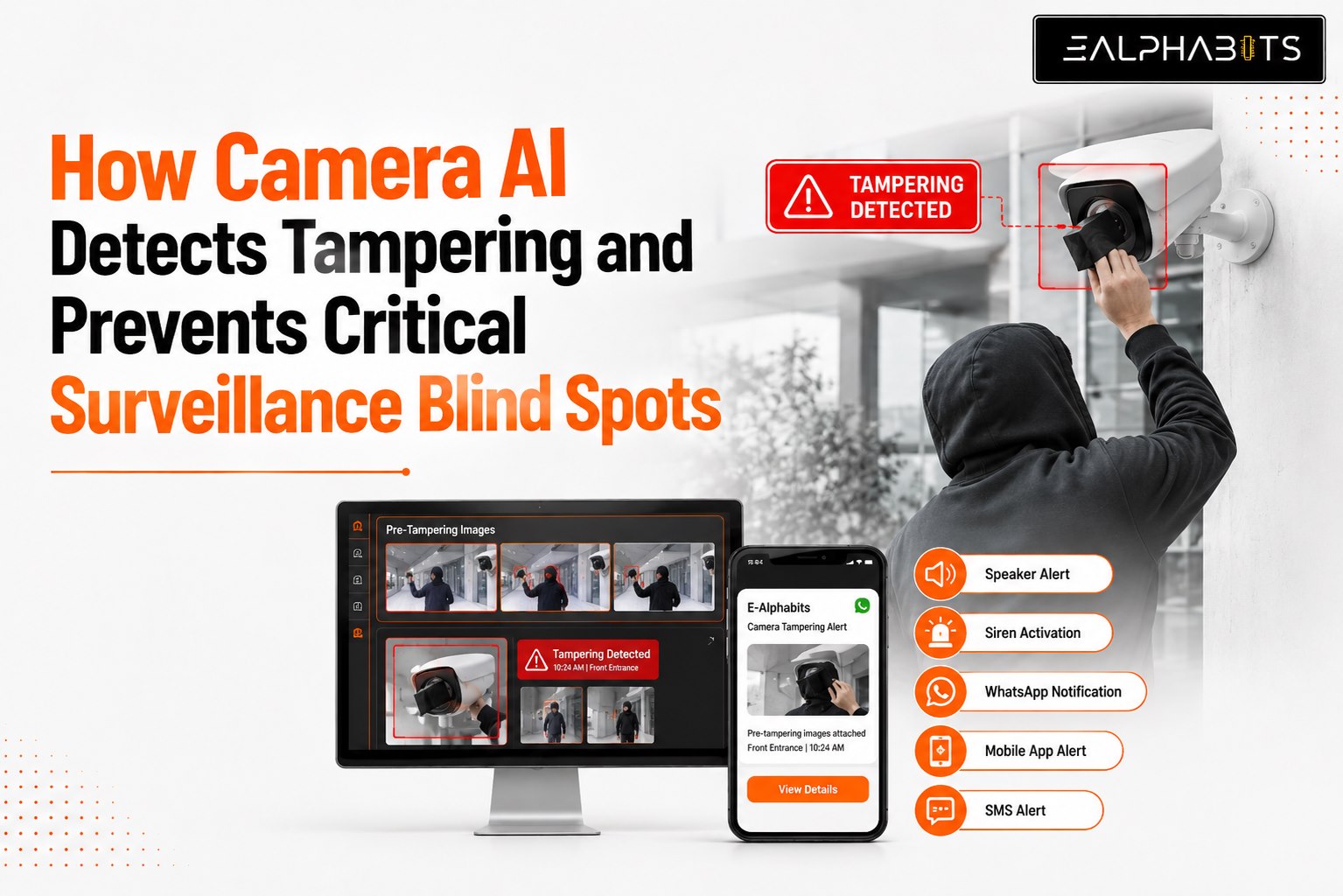
E-Alphabits’ Camera AI tampering solution is designed to detect different forms of interference and provide alerts through multiple channels. It can also capture multiple images shortly before tampering occurs, giving security teams useful information about what happened before the camera was compromised.
What Is CCTV Camera Tampering?
CCTV camera tampering refers to any action that interferes with a camera’s ability to properly monitor an area.
Tampering does not always mean physically damaging the camera. Someone may cover the lens, spray paint over it, place a sticker on it, move the camera, block its view or interfere with its connection.
For example, someone may approach a camera and place a sticker over the lens. The camera may still be powered on, but it can no longer provide useful visual information. This creates a security gap that may remain unnoticed unless someone actively identifies the problem.
Why Is CCTV Camera Tampering Serious?
A surveillance blind spot can give someone an opportunity to carry out an activity without being recorded.
Consider a warehouse where CCTV cameras monitor entrances, storage areas, and restricted sections. If someone intentionally blocks one of these cameras, security personnel may lose visibility of that location. If the obstruction is discovered several minutes later, it may be difficult to determine exactly who caused it.
The same problem can occur in manufacturing facilities, retail stores, parking areas, and offices where cameras are responsible for monitoring important locations.
Even a short period without visibility can matter when a security incident occurs.
That is what makes early detection of camera tampering an important part of modern surveillance.
Common Ways CCTV Cameras Can Be Tampered With
People may attempt to interfere with CCTV cameras in different ways depending on the environment. Some common examples include:
- Cutting or disconnecting camera wires
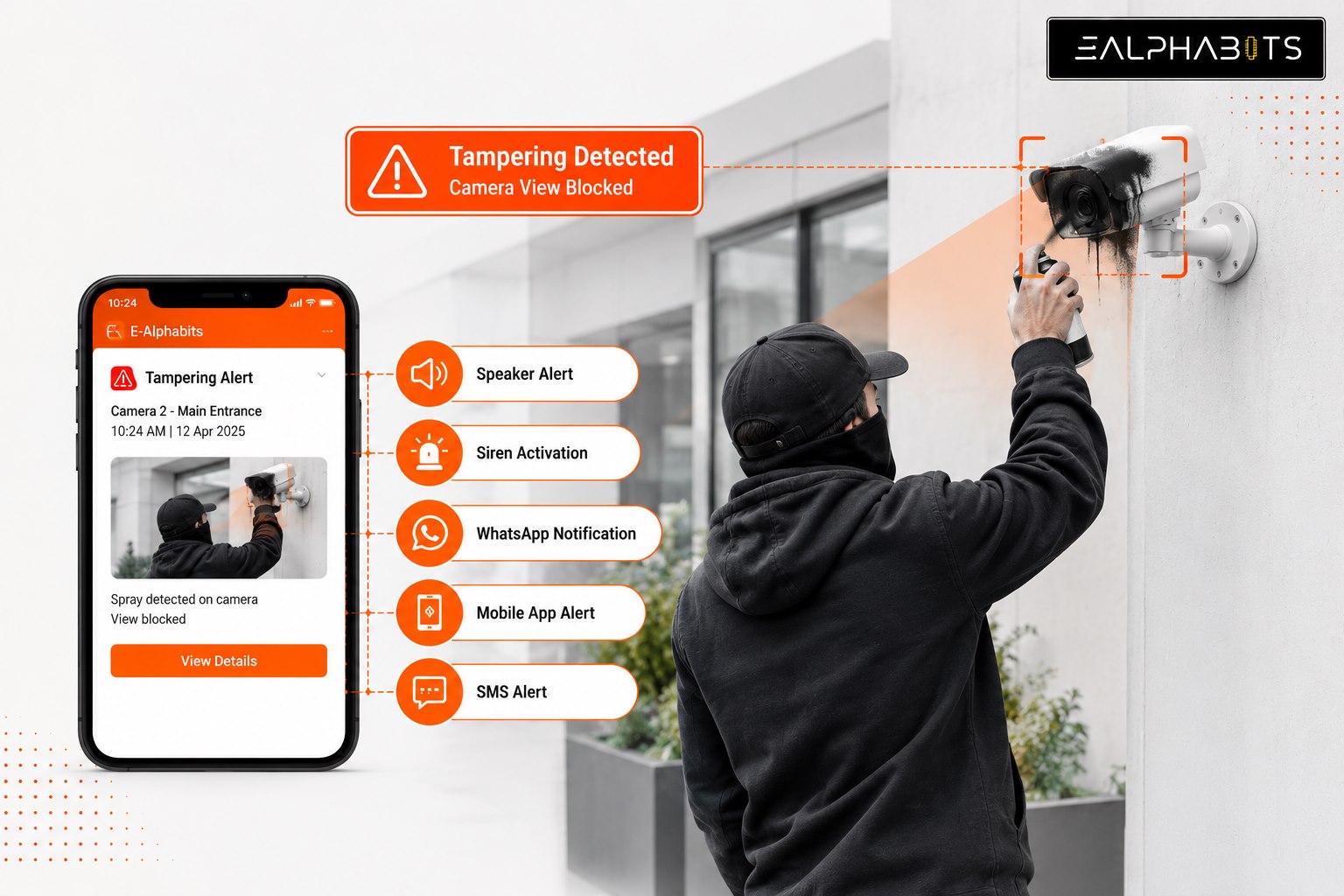
- Spraying paint over the lens
- Placing stickers over the camera
- Covering the lens with an object
- Blocking the camera’s field of view
- Physically moving or turning the camera
- Damaging the camera
- Creating other forms of obstruction
Although these methods are different, the result can be similar: the camera loses its ability to provide reliable surveillance.
Why Traditional CCTV and Human Monitoring Are Not Always Enough
Traditional CCTV systems are useful for recording and displaying video, but they generally depend on people to notice unusual activity.
Security teams may be responsible for monitoring dozens or even hundreds of camera feeds. Continuously watching every screen is difficult, particularly across large facilities.
Human monitoring may also not be available at every time and every location. During breaks, shift changes, busy periods, or after working hours, a tampering incident could go unnoticed until someone checks the camera later.
This is one reason businesses are exploring AI in security cameras. Instead of relying entirely on someone watching a screen, intelligent video analysis can continuously examine configured camera feeds and identify significant changes.
No camera replacement required
Depending on compatibility, the AI layer runs on top of the footage your existing cameras already produce — so a site can move from passive recording to tampering detection without replacing its surveillance infrastructure. See Adding AI to Existing CCTV for how that works.
How E-Alphabits Camera AI Tampering Solution Works
E-Alphabits’ Camera AI tampering solution is designed to provide more information than a simple camera failure notification.
A key feature is the ability to capture multiple images shortly before tampering occurs.
For example, a person approaches a CCTV camera. Before the camera becomes obstructed, the system captures multiple relevant images of the scene. The person then covers the lens with a sticker. Camera AI detects the tampering and triggers the configured alerts.
The security team can receive a notification along with the images captured shortly before the tampering event. These images can provide useful context about the person or activity around the camera before its view was compromised.
The same approach can be useful for situations involving cutting wires, spraying paint, covering the lens, placing stickers, physically interfering with the camera, and other forms of tampering.
What Happens When Tampering Is Detected?
Once tampering is detected, E-Alphabits’ solution can support multiple alert channels.
- Speaker alerts
Speakers can provide an audible warning when tampering is detected. - Siren activation
A siren can immediately draw attention to the incident and discourage further interference. - WhatsApp notifications
Security personnel can receive WhatsApp alerts with relevant images captured shortly before the tampering event. - Mobile app alerts
Notifications can be delivered through the mobile application for quick awareness. - SMS alerts
SMS provides another communication channel for responsible personnel.
Using multiple channels can help reduce dependence on a single security monitor or individual.
Why Pre-Tampering Images Matter
Knowing that a camera has been tampered with is important, but knowing what happened immediately before the event can provide additional information.
Suppose a camera suddenly becomes blocked. A basic alert may only tell the security team that the camera is no longer providing a clear view. The team may then need to investigate the incident without knowing who was responsible.
With pre-tampering images, the situation can be different.
Multiple images captured before the camera is obstructed may show a person approaching the camera or interacting with it. These images can provide useful visual context for investigation and response.
This capability is particularly valuable because once the camera is fully blocked, it may no longer be able to capture what is happening directly in front of it.
Where Camera AI Tampering Detection Can Be Used
Camera tampering detection can be useful in locations where continuous surveillance is important, including:
Manufacturing & warehousing
Production floors, storage areas and logistics centres where a blocked camera can hide movement of goods. See Camera AI for manufacturing.
Retail stores
Aisles, stockrooms and billing counters where losing a view can matter during trading hours. See Camera AI in retail.
Offices & commercial buildings
Reception areas, server rooms and shared floors monitored after working hours.
Schools, colleges & hospitals
Campuses and care facilities where cameras cover corridors, entrances and restricted wings.
Parking & entry-exit points
Gates, boom barriers and parking areas that are often the first cameras approached.
Restricted & high-security areas
Zones where a few minutes without visibility carries a disproportionate risk.
For offices and small businesses, selecting the best security cameras for office security should involve more than considering image quality and recording. Intelligent monitoring can also help identify when a camera’s view has been compromised.
Key Benefits of Camera AI Tampering Detection
A Camera AI-based tampering solution can help businesses:
- Detect camera obstruction and tampering quickly
- Reduce critical surveillance blind spots
- Capture images before the camera is compromised
- Provide useful visual context for investigation
- Activate speakers and sirens
- Send WhatsApp, app, and SMS alerts
- Reduce dependence on continuous manual monitoring
- Improve response to potential security incidents
- Enhance existing CCTV infrastructure
The goal is not simply to identify that a camera has a technical problem. It is to help businesses recognize when surveillance has been compromised and provide useful information for a faster response — one of the quieter ways Camera AI reduces the cost of security while improving the outcome.
Camera AI Solution in Ahmedabad for Smarter Surveillance
Businesses looking for a Camera AI Solution in Ahmedabad can add intelligent monitoring capabilities to compatible existing CCTV infrastructure.
E-Alphabits develops practical Camera AI solutions that help businesses automate visual monitoring and respond to important events without relying entirely on continuous manual observation. For teams that want this packaged as a ready deployment across a site, Workplace AI brings safety, security and productivity monitoring together in a single product.
As a Camera AI Solution Company in Ahmedabad, E-Alphabits focuses on practical applications that can support security requirements across different business environments. Alongside Camera AI, the team also builds Custom Enterprise LLM Solutions and IoT solutions.
Its tampering detection solution combines detection, pre-tampering image capture, and multiple alert channels to help businesses respond when a camera’s surveillance capability is compromised.
Conclusion
CCTV cameras are installed to provide visibility, but that visibility can disappear when a camera is tampered with. A blocked lens, spray paint, sticker, disconnected wire or physical obstruction can create a surveillance blind spot within a short period.
Camera AI can help address this challenge by continuously analyzing camera activity and detecting changes associated with tampering. If you are new to how that analysis works, How Camera with AI Works walks through it step by step.
E-Alphabits’ solution adds another layer of protection by capturing multiple images shortly before tampering and sending alerts through WhatsApp, mobile app notifications, and SMS while also activating speakers and sirens.
For businesses, this can turn CCTV monitoring into a more responsive security process. Instead of discovering a compromised camera later, security teams can receive an alert closer to the time of the event, along with useful images that may help explain what happened before the surveillance blind spot was created.
Frequently Asked Questions
Can CCTV cameras detect when someone covers the lens?
Yes. Intelligent video analysis can identify major changes or obstructions in a camera’s normal view and generate a tampering alert.
Can camera tampering be detected when security staff is not watching the screen?
Yes. Automated monitoring can continuously analyze configured camera feeds, reducing dependence on someone manually watching every camera at all times.
Can CCTV tampering detection work with existing cameras?
Depending on camera compatibility and deployment requirements, intelligent video analysis can be added to existing CCTV infrastructure rather than requiring a complete replacement. You can read more about that approach in Adding AI to Existing CCTV.
Can CCTV tampering alerts be sent to mobile devices?
Yes. Depending on the solution configuration, alerts can be delivered through channels such as mobile applications, WhatsApp, and SMS.
Why do pre-tampering images matter in a camera tampering alert?
Once a camera is fully blocked it can no longer capture what is happening in front of it. Images captured shortly before the obstruction may show a person approaching or interacting with the camera, giving security teams useful visual context for investigation and response.